When your five-year-old melts down over the wrong color cup, you reach for different things: the cutting board, or the bag of chocolate chips shoved behind the flour. Ask any suburban mom of two small kids and watch her hesitate before she answers that one honestly.
Here is the thing about postpartum stress eating: there are really only two moves that work once the kitchen chaos hits, and they are not the same move. One is building your meals ahead of time so the craving never gets loud enough to argue with. The other is trying to dampen the craving itself from the outside, which is exactly why a citrusburn review lives on this site. Neither move fixes the actual stress. But knowing which one you are reaching for changes what happens next, at 4 PM, on a random Tuesday.
Okay so before any of this clicked, I tried a 'clean eating' meal plan that called for ingredients I could never actually find near a Jewel-Osco. Half the recipes assumed some specialty grocery aisle that does not exist anywhere close to me. I gave up on it before I made it through the first grocery list, and that failure taught me more than the plan itself ever did.
The Real Cost of the Laundry Room Snack
The laundry room snack is a real thing in my house, and I am not proud of it. I wait until the cartoon hits a lull, duck behind the extra-large detergent jug, and unwrap something in near silence so nobody comes looking for a piece.
It cost more than I realized. One morning over cereal, my five-year-old looked up and asked, flat out, where 'the old me' went. I smiled, poured her juice, walked her out to the bus and fell apart quietly in the kitchen the second the door clicked shut behind her.
My neighbor handles her own version of chaos differently. She runs a book club that meets once a month in somebody's basement, and I used to think that sounded like exactly the kind of adult space I needed, with twenty minutes away from snack duty, wine in a real glass instead of a sippy cup.
Why Does Stress Eating Send You Straight to the Pantry?
There is an actual mechanism behind the pantry-raiding, and it helps to name it. When a toddler meltdown or a sibling fight spikes your cortisol, your body reads that spike as an emergency and starts asking for the fastest fuel it can find. That is the stress-hunger cycle in a nutshell: stress raises cortisol, cortisol demands quick energy, and quick energy almost always means sugar, not the kale salad sitting in the fridge.
That cycle does not care that you spent Sunday afternoon washing and chopping vegetables. By Tuesday at 4 PM, the vegetables lose to the noise every single time, because the craving is not about willpower — it is about a hormone doing exactly what it evolved to do.
Some of that noise gets louder postpartum specifically, since your body is still recalibrating sleep and hunger cues after having a baby — a whole separate rabbit hole I have mapped out elsewhere.
The Capsule Route vs. the Fridge Route
So once I understood the mechanism, I had two real options, and I tried both instead of picking a side right away.
The capsule route, for me, was a citrus supplement I stayed skeptical about the entire time — I wrote the full doubtful rundown in my 30 days with citrusburn post rather than repeat it here.
Avocado, walnuts, and full-fat Greek yogurt worked their way into lunch instead of just lean protein and rice. That was the fridge route. Higher-fat meals digest slower, which keeps blood sugar calmer, so the 4 PM cliff does not hit as hard. Most of that list comes out of a cart at Mariano's in Elmhurst these days, a far cry from the panic-grab version of grocery shopping I used to do. I have written separately about the actual what I buy at the Chicago suburb Aldi list this comes from, and the batching side of it — planning five lunches instead of one — is really its own separate skill.
MY THREE-YEAR-OLD JUST ASKED WHY THE COMPUTER IS TALKING TO ME, WHICH, FAIR QUESTION, BUDDY.
Anyway. Between the two, the fridge route is the one I trust more, because it does not depend on remembering to take anything. The food is just already there when the craving hits.
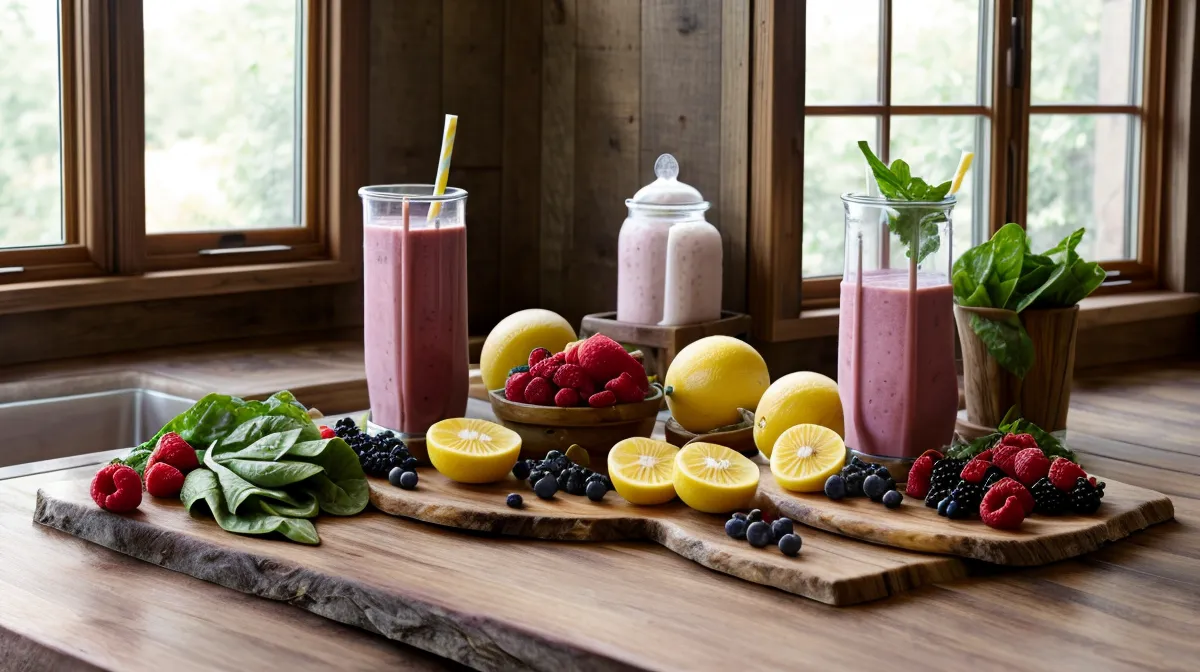
There is a corner by the blender that still smells faintly of overripe banana some mornings, and that smell alone is sometimes enough to make a smoothie sound better than whatever is hiding in the pantry.
Resetting the sugar cravings themselves is a slower process I have broken down in a separate post, and it works alongside either route rather than replacing one.
Some of the fullness also just comes down to eating enough actual volume at lunch, not only fat content, which is its own strategy I have covered elsewhere.
So Which One Actually Wins?
Neither route is a fix for the stress itself. The kids are still loud, the days are still long, and a capsule or an avocado will not change that part.
Pick the fridge route when you actually have a Sunday afternoon to prep and want something you fully control, with no ongoing cost and no guessing about what is in it. Pick the capsule route only as a small assist on top of meals that are already solid, not as a replacement for eating enough. Go in skeptical, because that is exactly how I went in.
Staying hydrated fits into both routes too, since a lot of what feels like hunger at 3 PM is really just thirst wearing a disguise. I found 5 realistic ways to drink more water between school drop-offs that actually stuck for me, unlike most hydration advice.
None of this is about becoming a different person, either. I wrote more about that whole side of it, the identity part underneath the food part, in how I reclaimed my identity beyond just being someone's mom.
If you are standing at the pantry right now trying to decide between the two routes, start with whichever one you can actually stick to on a bad week. That is the honest answer, and it is a better one than pretending willpower was ever going to be enough.