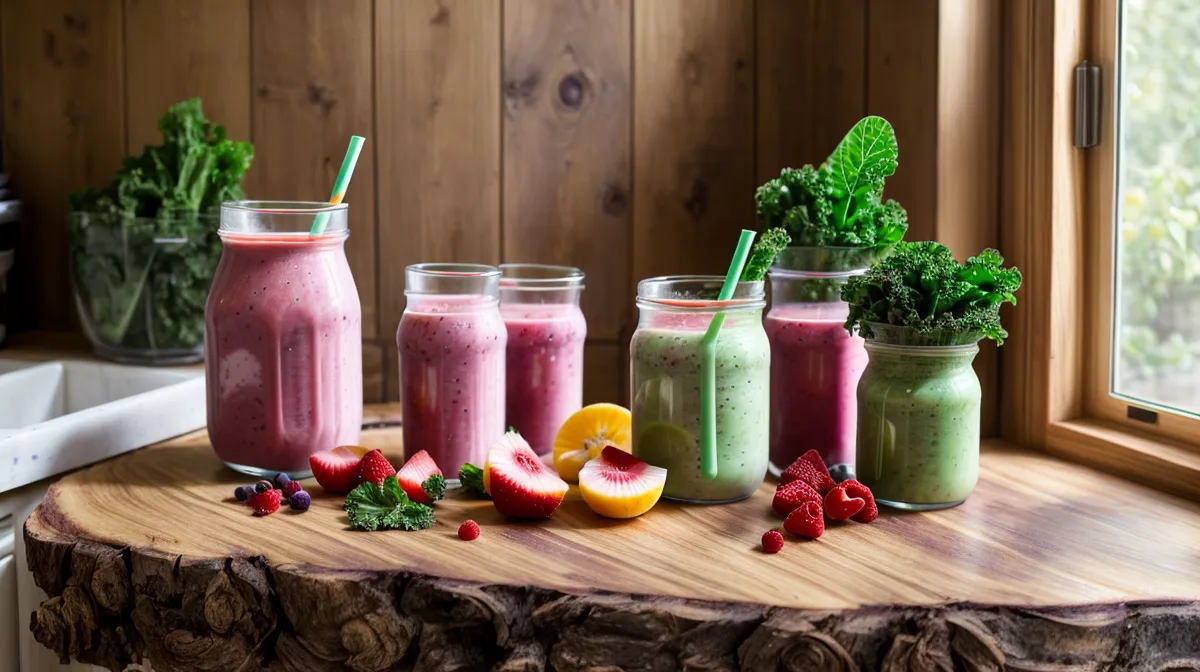
Four jars. That's how many perfectly layered, Pinterest-worthy salad jars I built one weekend, and every single one of them turned to mush before I made it through half of them. That flop is basically the whole reason batch cooking healthy lunches works at all in my house these days — not because I found some magic meal prep formula, but because I finally admitted which system actually survives suburban mom life with a toddler on my hip and a kindergartner yelling for juice and a show on repeat. Postpartum nutrition advice online loves to pretend there's one correct way to batch cook a week of lunches. There are at least two ways I've actually tested, and this is an honest look at both — including the one that failed.
That salad-jar disaster wasn't really a one-off mistake. It's what happens when a lunch system gets built around looking good in a photo instead of around how an actual week with kids behaves. Layers of dressing and greens sound smart until the greens go soft by the second morning and the whole thing goes in the trash, which is exactly what happened to mine.
Two Ways to Batch Cook: Identical Jars or Modular Components
Approach one is the one most meal-prep accounts will sell you: pick five identical lunches, portion them into five identical containers, and eat the same bowl every day until Friday. It's efficient on paper. It photographs beautifully lined up in a fridge. It also assumes you'll want chicken and rice on Wednesday exactly as much as you wanted it on Monday, which — living in suburban Chicago with a body that changed twice in three years — has NEVER once been true for me. I tried the identical-lunch approach the way it's supposed to work, and around the same stretch I also tried a 21-day sugar detox exactly as written. The detox lasted four honest days before a Tuesday afternoon ended with me eating cereal straight over the sink. Neither one survived contact with my actual life.
It also assumes appetite is a fixed, predictable thing, and mine just isn't. The reason identical lunches stopped working for me ties directly back to why I stopped hating my postpartum body and started fueling it instead of punishing it — a postpartum body's hunger and energy shift in ways a rigid five-day plan just doesn't account for.
A friend of mine does reformer Pilates three times a week at a studio in Lisle, and even she admits she preps her lunches the boring, repetitive way, because her schedule is locked and predictable enough that sameness doesn't bother her. My schedule is a toddler's nap length and a kindergartner's mood on any given morning. Those are not the same constraint.
Two Sheet Pans and One Pot Do Most of the Work
Approach two — the one that actually stuck — needs almost no special gear. Two standard half-sheet pans and one large pot for a grain or a bean. That's the entire equipment list. No spiralizer, no meal-prep container subscription, no gadget drawer to feel guilty about.
Both pans go into a 400-degree oven at the same time, which is hot enough to get real Maillard reaction browning on the vegetables without turning the whole house into a smoke-alarm situation while I'm wiping a toddler's nose with the other hand.
Where the Two Hours of Batch Cooking Actually Goes
The first twenty minutes disappear into chopping — sweet potatoes, peppers, broccoli, chicken breast, all tossed in oil and salt while stepping over a rogue LEGO piece that somehow always finds my foot. The next forty minutes are the roast, with both pans in the oven and a pot of quinoa or brown rice going at the same time.
Cleanup happens while everything cools, which is usually just a cutting board and one pot, and it's also when I remember the water bottle I never opened. I already wrote about 5 realistic ways to drink more water between school drop-offs, and forgetting to drink anything before lunchtime is a running theme in this house.
The last half hour is assembly — pulling out containers and portioning everything into whatever holds up best in the fridge. That two-hour Sunday window is really what turns the entire week's lunches into a grab-and-go decision instead of a frantic scramble at noon, no matter which of the two approaches you end up choosing. I used to do this with mismatched plastic tubs, and the lids never closed without a two-handed wrestling match and a word not appropriate for the kids to hear, before I finally gave up and switched to glass.
Why I Stopped Making Five Identical Lunches
Instead of five identical bowls, I keep the roasted components separate and change what goes on top instead. Same roasted chicken and sweet potatoes most days, but Monday gets tahini, Tuesday gets salsa, Wednesday gets balsamic. What actually goes on the pans depends on what looks decent that week at Trader Joe's in Wheaton rather than a fixed list — I've broken down what I buy at the Chicago suburb Aldi to stay on track in more detail elsewhere, though these days it's whichever store has decent produce that isn't wilted in the bin. Packing the pan full of roasted vegetables before the protein goes on is its own trick for staying full on fewer calories, though that's a deeper topic than one batch-cooking post can cover.
Those 2pm pantry raids I used to do weren't really about being hungry — they were closer to a stress-hunger loop that had nothing to do with my stomach and everything to do with the day I was having. I've read enough supplement reviews promising to fix an afternoon energy crash to stay skeptical of anything sold in a bottle, and resetting an actual sugar craving is its own separate project I've written about elsewhere. This is just the lunch half of that equation.
Is One Method Actually Safer Than the Other?
On the safety side, both approaches carry the same basic limit: cooked chicken and grain bowls don't keep in the fridge forever, so I plan to eat through a batch within a few days and freeze whatever's left rather than push my luck. That's not medical advice — it's just the practical ceiling I build the whole schedule around, and a food-safety resource or your own doctor is a better source for the specifics than a mom with a sheet pan. I did switch entirely to glass containers a while back, mostly because they don't hang onto smells and stains the way the old plastic ones did.
So Which Method Should You Actually Use?
Here is the thing that actually convinced me, and it wasn't a before-and-after photo. It was an ordinary Wednesday when 2pm rolled around and I hadn't reached for a second cup of coffee, because lunch had actually done its job instead of leaving me starving by early afternoon.
So which approach wins? Approach one — five identical lunches — makes sense if your week is genuinely the same every day: a predictable lunch break, nobody around to notice if Tuesday tastes exactly like Monday. Approach two — modular components with rotating sauces — is the one to pick if your week looks more like mine, where a friend can lock in the same reformer Pilates class three times a week and I can't promise I'll want buffalo chicken two days running. Neither one is the objectively correct answer. Pick based on how repetitive your actual week is, not on which one looks better lined up for a photo.
Okay so the short version: two pans, one pot, a handful of sauces, and zero guilt about the jar experiment that did NOT work. Also, someone is currently yelling about a missing shoe, so that's where this ends.