Both hands are deep in a gallon freezer bag, working lime juice and garlic into raw chicken thighs, when my phone buzzes with a message from a reader asking the same question I get more than any other: how do freezer meals actually help with postpartum weight loss when you're already this tired?
Short answer: yes, but not because there's anything magic in the food. Freezer cooking works because it removes the one decision point where suburban mom life at 5 PM turns into a drive-thru run instead of dinner. That's it. That's the whole mechanism, and everyone who makes it sound more complicated than that is selling something.
The actual Sunday meal-prep assembly — the chopping, the bagging, the labeling — is its own process, and I've written that part up separately for other tired moms juggling picky eaters. What people ask me about more, especially after a trip to the freezer aisle at Mariano's in Elmhurst where the pre-portioned protein packs cost more per bag than it's worth, is whether any of this frozen stuff actually helps with weight loss or if it's just expensive convenience with better branding.
Why Do Freezer Meals Even Help With Postpartum Weight Loss?
Freezer meals help because they collapse decision fatigue, not because frozen food has some special property raw food doesn't. By the time dinner rolls around, a lot of moms are running on fumes from a full day of choosing snacks, refereeing fights over who gets the blue plate, and deciding whether a fever is a stay-home fever or a give-her-a-popsicle-and-see fever. If the meal is already assembled and thawed, you're not choosing between a salad and a bag of fries at the worst possible moment. You're just cooking what's already sitting there.
There's a whole conversation to have about what pregnancy actually does to your metabolism afterward, and I've gone deep on that in a separate post — here, the practical version is that no metabolism outruns a kitchen with nothing ready to eat at 5 PM.
Is Freezing Vegetables Raw Really Better?
In my experience, yes, with one real exception.
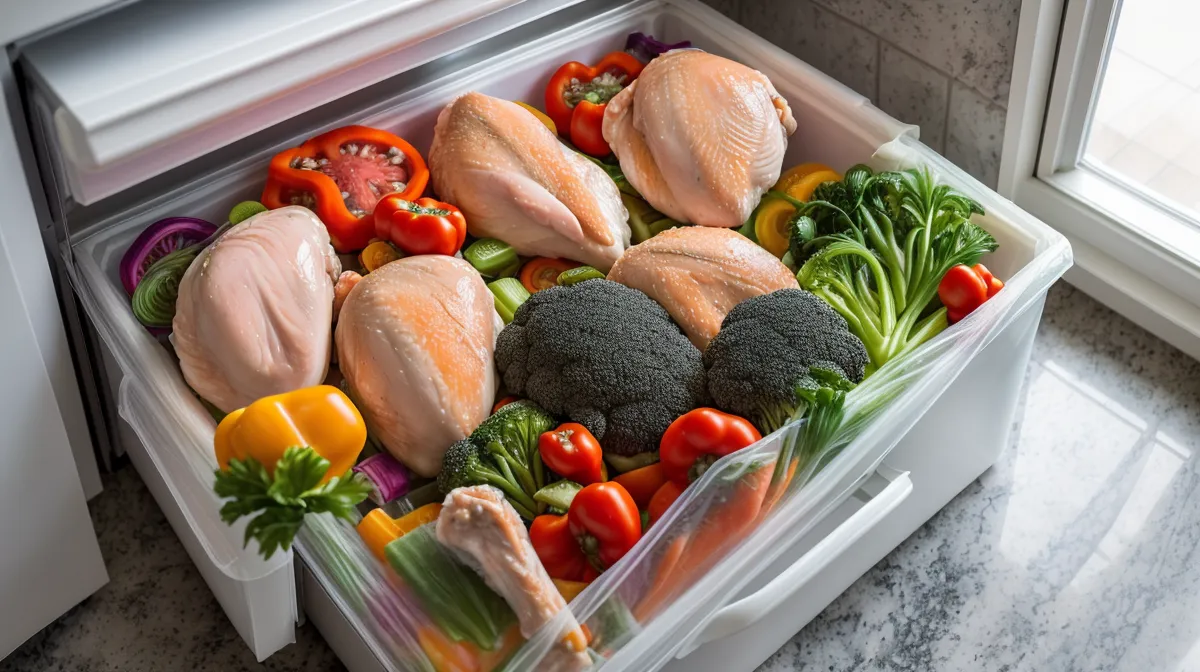
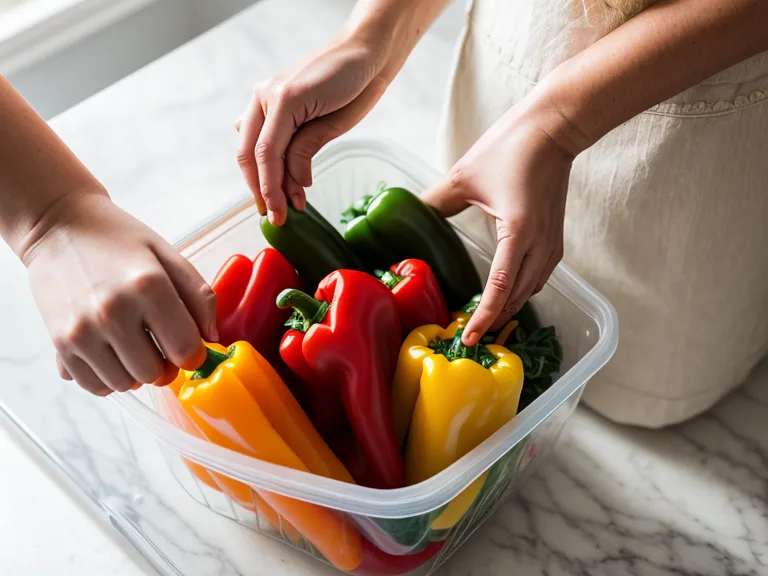
Freezing raw chopped vegetables alongside raw protein kept everything crisp instead of turning into the grey, mushy pile that ruins a freezer meal's reputation. Sturdy vegetables like green beans and broccoli are the exception — blanching them for a couple minutes before they go in the bag is the one extra step worth the hassle, because skip it and you get vegetables with the texture of a wet paper towel by Thursday.
What Actually Didn't Work For Me
Here is the thing about portion control: it sounds smart until you actually live with it. I ordered a set of portion-control plates off Amazon during one particularly ambitious stretch, the kind divided into sections for protein, vegetables, and a "measured" starch corner. They looked great in the product photos. By the following week I'd stopped using them entirely, and they just sat there, untouched, doing absolutely nothing for anyone.
The single-serving containers everyone recommends for weight loss caused the opposite problem, honestly. Freezing everything into pre-portioned little tubs made it so low-friction to reheat one, decide I was still "bored-hungry," and reheat a second, that I'd polish off two servings before I'd really registered eating dinner at all. There's a whole stress-hunger cycle behind why those snack attacks hit hardest on the worst days, and that's its own post too — here, the fix was switching to whole-family batch bags and piling on fresh greens for volume, which ties into how I use high volume meals to lose weight without feeling hungry — same idea, just applied to freezer night instead of an everyday plate.
The Food Safety Stuff Nobody Wants to Read

Nobody wants to read about food safety, but skip it and you're one bad batch away from a family with stomachaches. Keep your freezer cold enough that things stay solid, not slushy. When you cook the protein, make sure it's actually done all the way through — not "probably fine," actually done. I use a meat thermometer every single time because guessing is how you end up either undercooking something or serving dry, rubbery chicken, and nobody loses weight happily while chewing rubber.
How long a given freezer meal actually holds up before it starts tasting like a science experiment depends heavily on what's in the bag — a chili freezes beautifully for a long stretch, some cream-based sauces do not — and I put together a whole reference chart on which prepped meals actually survive a freeze and thaw with their texture intact, and which ones come back as something nobody in the house will eat. Worth a look before you commit a Sunday afternoon to a recipe that won't make it to Thursday.
The System Breaks Down Sometimes
Even a good system fails sometimes, and mine did on a random Tuesday when I forgot to move a bag from the freezer to the fridge the night before. What I ended up with was a rock-solid brick that took two hours to even attempt cooking while both kids lost their minds waiting for dinner, and we ate cereal instead. Nobody starved. It was still not the win I'd planned for that night.
Now there's a hard rule in my house — the bag comes out the night before, no exceptions, same as I've had to figure out for picky-eater dinners generally. If you're dealing with a toddler who rejects anything green on sight, I've got some healthy crockpot recipes for weight loss that my picky toddlers eat that solved more dinner standoffs than I can count. Leave about an inch of headspace in any bag or container too, because liquid expands as it freezes — I learned that one when a bag of turkey chili split open in my freezer like a tiny, spicy bomb.
My Actual Dump-and-Go Formula
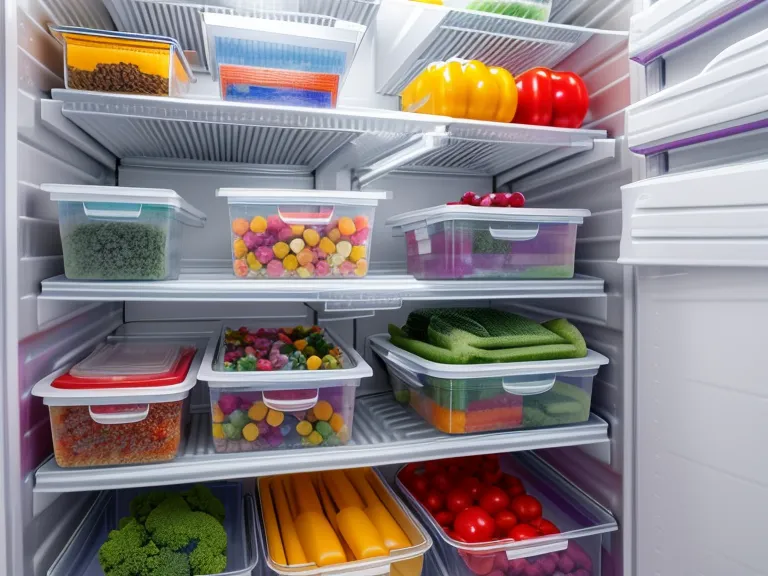
My actual dump-and-go formula hasn't changed much since I started. The protein is somewhere between a pound and a half and two pounds of something lean: chicken breast, ground turkey, or chickpeas on the nights nobody wants meat. The vegetable base is whatever holds up to freezing without turning to mush: bell peppers, onions, carrots, that whole sturdy category. The sauce stays low-sugar on purpose: lime juice, garlic, ginger, maybe a splash of low-sodium soy sauce, nothing that needs a spoonful of sugar to taste like something. And the freeze itself matters more than people think: lay the bag flat so it freezes like a book instead of a boulder, because that's the only way anything fits in a narrow suburban freezer-on-top fridge next to the popsicles and whatever bag of fossilized peas nobody will admit to owning.
Does This Actually Work Long-Term?
For me, yes, though "working" looked different than I expected going in. The clearest proof wasn't a number on a scale. It was my five-year-old, watching me chase her little brother around the living room, saying something like I looked like myself again, and I turned around and pretended to check on dinner so she wouldn't catch my face crumbling before she wandered off to go find her markers.
None of it involved cutting out sugar cold turkey. I've got a separate post about how I dealt with sugar cravings without giving up chocolate entirely, because that fight is real and deserves its own space. It also wasn't about some gut-health powder my neighbor Bridget kept sending me memes about. She forwards one every time a new supplement goes viral, usually captioned something like "is THIS the one," and I mostly just muted the group chat and kept assembling freezer bags. Gut microbiome science and protein-and-satiety research are both real threads worth reading about, just not ones I'm unpacking properly in a post about freezer bags.
If mornings are just as chaotic as dinner in your house, I've also worked through some healthy breakfast meal prep for the busy suburban Chicago school run ideas that keep me out of the drive-thru line more mornings than not.
Start with three bags. Not a month of meals, not a whole freezer overhaul: three. See how three nights of not having to think about dinner actually feel before you decide whether to go bigger. That's the real answer here, not a formula, not a percentage. Just three fewer nights where dinner is a crisis.